
What does it mean to be an active European citizen in today’s complex world? The Jesuit European Educational Project (JEEP) offered students a unique opportunity to explore this question through experience rather than theory. By simulating the work of the European Parliament, the project invited young people to take on the roles of decision-makers, engaging directly with the challenges that shape contemporary Europe.
Since its beginnings in 2005, JEEP has brought together students and teachers from Jesuit schools across Europe. Each year, a different host school welcomes delegations from several European Union countries for an intensive, week-long session. Over time, the project has grown into a strong international network, connecting schools from Lithuania, Hungary, Italy, Spain, France, Belgium, and Croatia. Beyond its academic dimension, JEEP has become a platform for intercultural exchange, encouraging students to collaborate across national and cultural boundaries while developing a deeper understanding of European values and institutions.
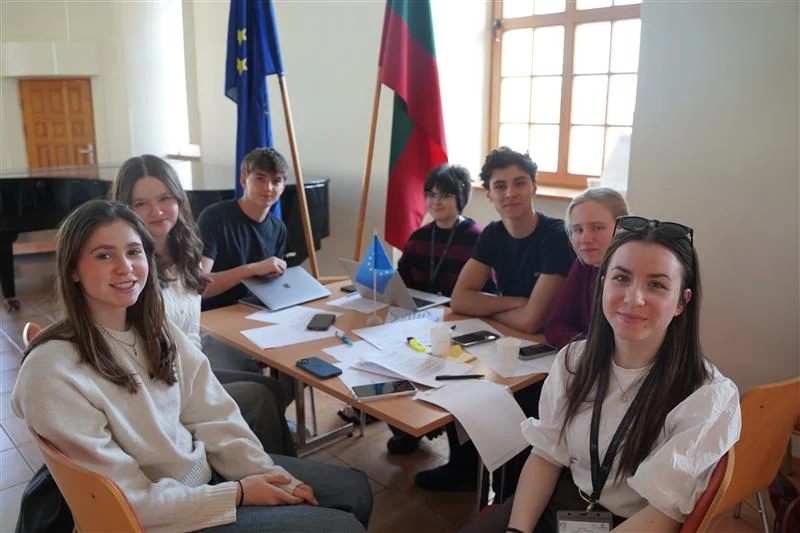
At the heart of the project is its simulation model. Students work in committees focusing on key issues relevant to the European Union, where they analyze complex topics, debate different perspectives, and collaboratively draft resolutions. The process closely mirrors real parliamentary procedures, requiring not only subject knowledge but also the ability to argue persuasively, listen actively, and negotiate effectively.
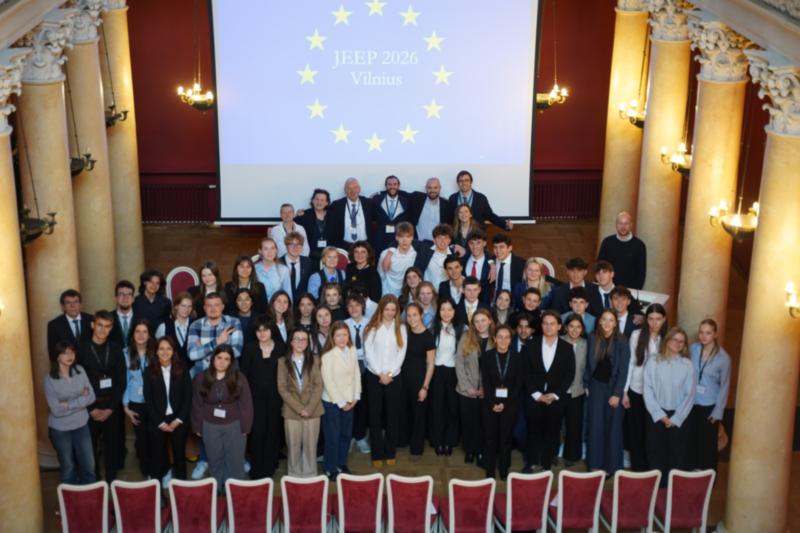
This year’s JEEP session took place in Vilnius, hosted by Vilnius Jesuit High School in cooperation with Kaunas Jesuit High School. Delegations from Croatia, Hungary, Belgium, France, Italy, Spain, and Lithuania came together to engage in discussions on pressing social, political, and ethical issues. The committees addressed a wide range of contemporary topics, including online safety for minors, environmental sustainability and public health, gender equality and the gender pay gap, the protection of democracy in the digital age, sustainable transport and tourism, as well as Europe’s role in global affairs.
Beyond the formal sessions, students also experienced an important social dimension of the project: they stayed with host families, allowing them to immerse themselves in everyday life in a different cultural environment. They travelled together, shared meals, explored the city, and built friendships that often extended beyond the duration of the project, strengthening intercultural understanding and creating a strong sense of community.
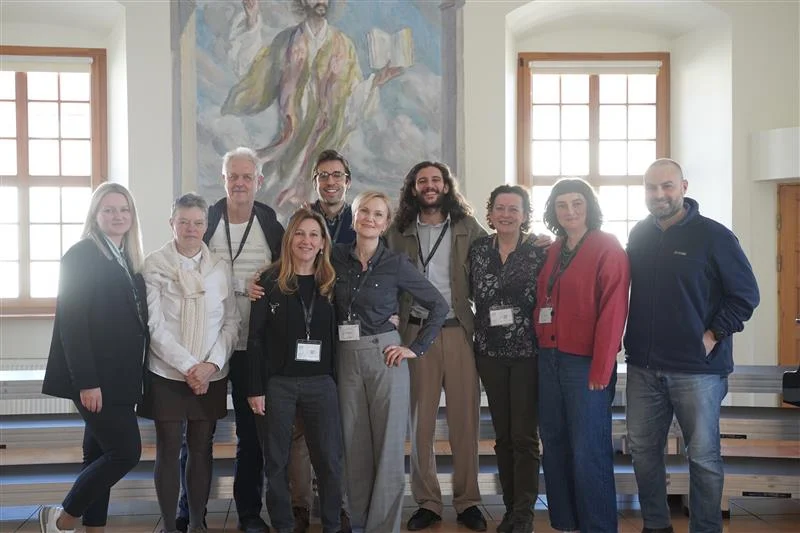
Throughout the week, participants actively engaged in committee work, exchanging ideas and working towards common resolutions in an atmosphere of collaboration and mutual respect. The project was officially opened by one of its founders, German educator Andreas Günterberg. The opening ceremony also featured students who had participated in the project the previous year, who shared their reflections on what JEEP is and what the experience had meant to them personally. Their insights offered a valuable perspective for this year’s participants, highlighting both the academic and personal impact of the project.
The session concluded with a General Assembly held at Vilnius University, in the historic setting of the former Jesuit College. This location carried a symbolic meaning, as the roots of the university are closely linked to the Jesuit tradition, making it a particularly fitting venue for a project grounded in Jesuit educational values. During the assembly, each committee presented its work following a structured procedure: a five-minute introductory speech, followed by twenty-five minutes of questions and debate, and a final closing statement before the resolution was put to a vote. This process allowed students to experience the full cycle of parliamentary decision-making, from presenting arguments to defending them under scrutiny and ultimately voting to adopt or reject each proposal. The assembly day began with an inspiring speech by Pierre Vinck, one of the founders of the project, who now participates as a guest, and concluded, with his closing remarks, marking a fitting end to an intensive and inspiring week of debate and cooperation.
Looking ahead, the JEEP community will continue its journey next year in Milan, where the project will be hosted by the Jesuit school Istituto Leone XIII. More than a simulation, JEEP empowers students to become thoughtful, engaged citizens ready to shape the future of Europe.